



Resistant to temperature changes: this will be the future of PUFs
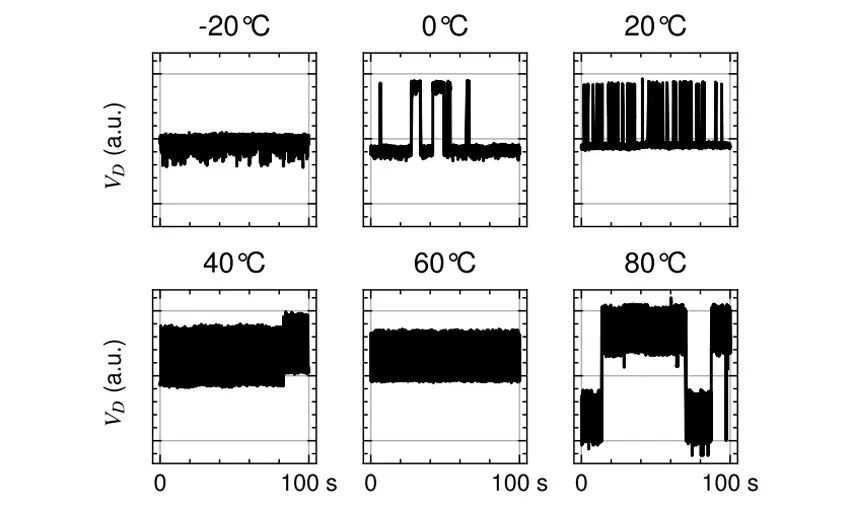
From the Instituto de Microelectrónica de Sevilla (IMSE-CNM) we are pleased to announce the recent publication by the journal IEEE Transactions on Circuits and Systems I: Regular Papers of the article entitled "A Comprehensive Approach to Improving the Thermal Reliability of RTN-Based PUFs" to which researchers from our center have contributed.
1 min read
In this study, hardware security is presented as a “low-cost” alternative to protect our data from third parties, especially in a world where cyberattacks are increasingly common. In particular, Physical Unclonable Functions (PUFs), which are the “fingerprints” of electronic devices, are presented as an interesting option to generate cryptographic keys to protect communications between people. However, and although their useful life is long, heat or cold can alter their operation. To solve this problem, the study proposes certain methods that allow these systems to continue working properly, even when the temperature changes, expanding the range of applicability of these devices.
From IMSE we would like to congratulate Fernando de los Santos, Francisco J. Rubio, Rafael Castro, Elisenda Roca and Francisco V. Fernández for this research and congratulate them for the subsequent publication in one of the most highly valued media in the scientific community.
Keep reading

Research
The IMSE-CNM will return to Brussels to bring cybersecurity closer to the European public
'Science is Wonderful!', the international science fair organized by the European Commission, will be held in Brussels from March 16 to 19, 2027, and will once again feature—for the fourth consecutive year—a team of researchers from the Institute of Microelectronics of Seville (IMSE-CNM)

Research
IMSE is co-leading a European project that seeks to strengthen technological autonomy in semiconductors
The ODE4EC-AMS initiative, which brings together 25 partners from 11 countries and has a budget exceeding €15 million, seeks to boost European competitiveness and technological autonomy and facilitate access to advanced chip design technologies

Research
Dodging lasers to understand digital security
Through a laser maze and cryptographic challenges, researchers from the center brought key concepts of digital protection closer to hundreds of students from all over Europe